Wondering what daily life in an Orange County condo community really feels like? If you are comparing condos with single-family homes, the biggest differences usually show up in the routines of everyday living, not just in the listing photos. From HOA dues and parking to pet rules and commute options, understanding how condo communities work can help you choose a home that fits your budget and lifestyle. Let’s dive in.
Condo living starts with the HOA
In Orange County, condo ownership usually means buying into a common interest development. You own your unit, while shared areas and facilities are managed by a homeowners association, or HOA, under California’s Davis-Stirling framework.
That structure affects everyday life in practical ways. Your monthly dues help fund the operation and maintenance of common facilities, and the HOA’s CC&Rs, bylaws, and articles set the rules for how the community functions. In other words, condo living is about more than square footage. It is also about shared responsibilities.
What HOA dues can mean for your budget
One of the first questions most buyers ask is simple: what do the dues actually cover? The answer varies by community, but dues are typically tied to maintaining shared spaces and facilities rather than your private interior living space.
The California Department of Real Estate also notes that buyers should pay close attention to HOA budgets, reserve disclosures, and the overall physical condition of the property. If an HOA is underfunded, that can lead to deferred maintenance or special assessments later. That is why reviewing the numbers matters just as much as touring the unit.
Key HOA questions to ask
Before you buy, it helps to get clear answers on a few basics:
- What do the monthly dues cover?
- How strong are the HOA reserves?
- Are there any special assessments planned or being discussed?
- What rules apply to owners, guests, parking, and pets?
- How is exterior maintenance handled?
These questions can give you a much better picture of what day-to-day ownership will feel like after closing.
Maintenance is often simpler, but less flexible
For many buyers, one of the biggest benefits of condo living is reduced exterior upkeep. Compared with a detached home, a condo often means less responsibility for things like shared landscaping, exterior maintenance, and common-area care.
That tradeoff can make life easier if you want a lower-maintenance routine. At the same time, you usually give up some control because community rules and shared decision-making are part of the package. If you like simplicity, this can be a real advantage. If you want total freedom, it may feel more limiting.
Parking can shape your daily routine
Parking is one of the most important practical differences between condo communities and detached homes in Orange County. Some communities include assigned garage spaces or designated parking spots, while others may offer a different setup depending on the property.
This matters even more in denser areas where city parking policies affect the surrounding neighborhood. In Old Towne Orange, for example, the city launched a paid parking program in 2025 to improve availability around the Plaza. If you expect guests, own multiple cars, or want easy street parking, this is worth checking before you commit.
What to verify about parking
Ask for specifics instead of general descriptions. A community that advertises parking may still have rules or limitations that affect daily convenience.
Here are a few details to confirm:
- Number of assigned spaces
- Whether parking is garage, carport, or open space
- Guest parking availability
- Street parking conditions nearby
- Rules for oversized vehicles or overnight parking
Pet rules are not one-size-fits-all
If you have pets, condo due diligence should include a close look at HOA rules. Pet policies are community-specific, and restrictions can differ from one HOA to the next.
Before you move forward, verify whether the community limits pet counts, size, weight, or other conditions. It is better to know the exact rules upfront than to assume all condo communities operate the same way.
Your lifestyle outside the community can matter too. For example, Newport Beach allows dogs on city beaches only before 10 a.m. and after 4:30 p.m., while Huntington Beach has a dedicated Huntington Dog Beach. If beach time with your dog is part of your routine, those local rules can shape where you want to live.
Privacy and layout vary more than you may expect
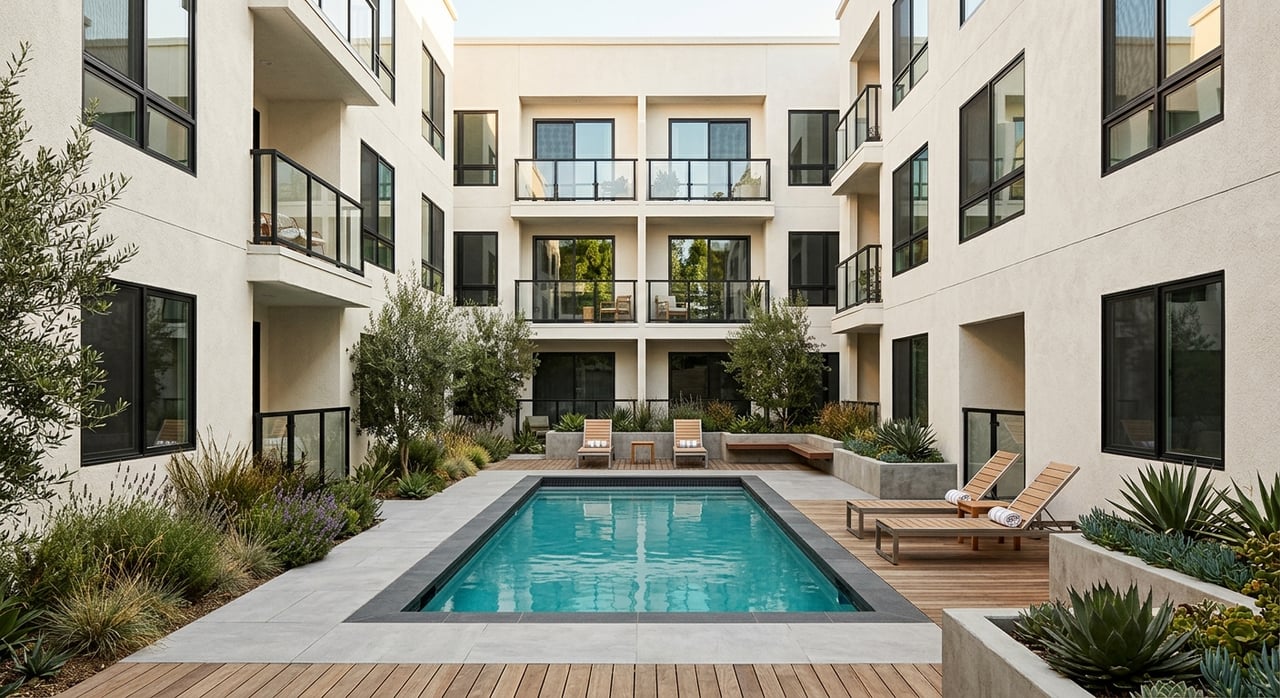
Not every condo feels the same. Some communities offer stacked units with shared walls, while others include detached condos or layouts with fewer shared boundaries.
That difference can affect noise, privacy, outdoor space, and the overall feel of the home. Current Santa Ana inventory, for example, includes a detached condo with no shared walls, which shows how wide the condo category can be. If privacy is high on your list, it helps to compare the physical layout of each community, not just the price.
Orange County condo hubs feel different
Location shapes condo living just as much as the property itself. In Orange County, condo communities near transit, shopping, and entertainment often deliver a very different daily experience than those in quieter, more residential pockets.
Here is how a few key condo hubs stand out.
Santa Ana and South Coast Metro
Santa Ana’s South Coast area offers a more urban, connected feel for buyers who want to stay close to major retail and transit. The area sits near South Coast Plaza and is being reshaped by The Village Santa Ana plan, which would add residential units, retail, office space, and open space near the existing mall district.
The Santa Ana Regional Transportation Center brings together Amtrak, Metrolink, OCTA, and intercity bus service in one place. That can be a major plus if you want more commuting options. In Redfin’s current snapshot, Santa Ana condos showed a median listing price of about $425K, which helps explain why the area gets attention from value-focused buyers.
Anaheim and the Platinum Triangle
Anaheim’s Platinum Triangle has a distinctly high-density, mixed-use character. Centered around Angel Stadium, Honda Center, and The Grove of Anaheim, it offers a more event-driven and urban environment than a traditional suburban tract.
The city highlights access to freeways, ARTIC, Anaheim Resort Transit, OCTA buses, bikeways, and pedestrian streets. If you like being near activity and transportation options, this area may stand out. Anaheim condos were listed at a median price around $625K in late May 2026.
Orange and Old Towne Orange
Old Towne Orange offers one of the most downtown-like settings in the county. The city points to its mix of antique shops, restaurants, events, Chapman University, the Orange Public Library & History Center, and access through the Orange Metrolink Station.
That walkable character can be appealing, but it also comes with practical tradeoffs like parking pressure in older, denser areas. The city’s paid parking program around the Plaza is a reminder that convenience can depend on both the condo community and the surrounding district. Orange condos were showing a median listing price of about $670K.
Irvine and the Spectrum area
Irvine’s Spectrum area tends to feel newer, more planned, and more amenity-rich. Irvine Station connects Amtrak, Metrolink, and OCTA service, while Irvine Spectrum Center serves as a major hub for shopping, dining, entertainment, and open-air gathering spaces.
In current listings, Irvine also stands out for larger and newer condo options that may include clubhouses, private outdoor decks, and multiple parking spaces. That added convenience often comes at a higher price point. Current Irvine condo listings showed a median around $1.35M.
Condo living often connects to nearby lifestyle perks
A big part of Orange County condo living is what sits beyond your front door. Shopping, dining, entertainment, transit access, and beach options often shape the experience as much as the unit itself.
South Coast Plaza describes itself as a premier shopping destination with more than 230 boutiques and dining options, while Irvine Spectrum Center emphasizes shopping, dining, entertainment, and family-friendly attractions like a carousel and giant wheel. In many condo-heavy areas, these destinations become part of your normal weekly routine.
Beach access also remains part of the Orange County appeal. Newport Beach has more than eight miles of beaches and public parking areas, while Huntington Beach promotes 10 miles of shoreline and a dedicated dog beach. Depending on where you buy, weekend plans may be a short drive away.
Condos can be a more attainable way in
Orange County remains a high-cost market, so many buyers look at condos as a more attainable entry point. In late May 2026, countywide condo listings were around a $730K median, while the countywide all-home median sale price was about $1.3M in March 2026.
That price gap helps explain why condos are often part of the conversation for first-time buyers, downsizers, and buyers who want Orange County access without the cost of a detached home. Of course, monthly dues, parking, rules, and privacy should still be weighed alongside the purchase price.
How to compare condo communities wisely
The best condo choice usually comes down to matching the community with your real routine. A lower price may look attractive, but the wrong parking setup, strict pet rules, or weak HOA reserves can make daily life harder than expected.
As you compare options in Santa Ana, Anaheim, Orange, or Irvine, focus on the details that affect you most:
- HOA dues and what they cover
- Reserve health and signs of deferred maintenance
- Parking setup for residents and guests
- Pet rules and outdoor access
- Commute options and transit connections
- Privacy, shared walls, and outdoor space
- Nearby shopping, dining, and recreation
When you take that practical approach, it becomes much easier to tell whether a condo community truly supports the way you want to live.
If you are exploring condo communities in Orange County and want clear, data-driven guidance, working with an experienced local team can help you sort through the fine print and focus on the right fit. For practical support with buying, selling, or evaluating your options, connect with Misael Vasquez.
FAQs
What does condo ownership in Orange County usually include?
- Condo ownership usually means you own your individual unit while shared areas and facilities are managed by an HOA, with rules and responsibilities set through governing documents.
What should buyers review about an Orange County HOA before buying?
- Buyers should review the HOA budget, reserve disclosures, governing documents, and the property’s physical condition to better understand dues, maintenance planning, and the risk of special assessments.
How does parking work in Orange County condo communities?
- Parking varies by community and may include assigned garage spaces, designated parking spots, or other arrangements, so you should confirm exactly what is included and what guest parking rules apply.
Are pet rules the same in every Orange County condo community?
- No, pet policies are community-specific, so you should verify pet counts, size or weight limits, and any other HOA restrictions before making an offer.
Which Orange County condo areas have the most transit access?
- Santa Ana, Anaheim, and Irvine each have major transit connections through the Santa Ana Regional Transportation Center, ARTIC, and Irvine Station, which can be helpful if you want more commuting options.
Are condos more affordable than houses in Orange County?
- Condo listings in Orange County were around a $730K median in late May 2026, compared with a countywide all-home median sale price of about $1.3M in March 2026, which helps explain why many buyers see condos as a more attainable option.