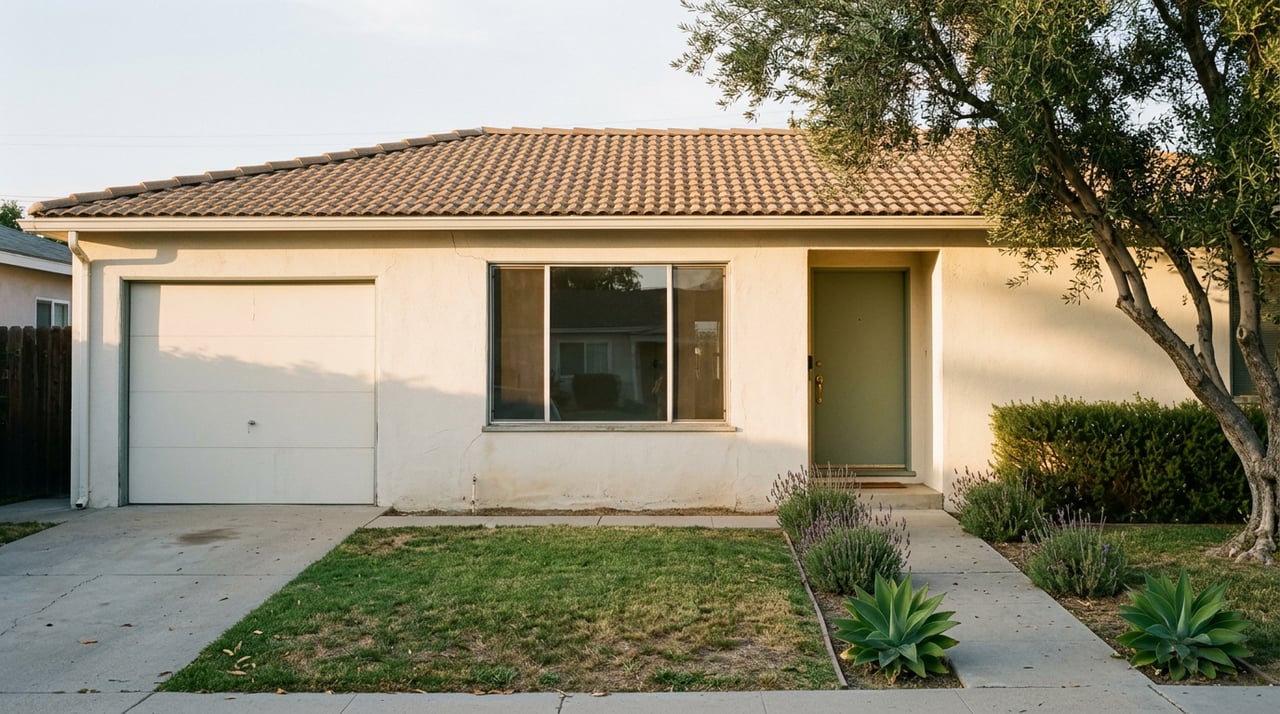
The call usually starts with a number. A sibling ran the address through an online estimator, and now the family has a figure in mind for what the house on the corner is worth. It rarely matches the number that ends up governing the sale.
That gap is not a fluke of bad data. It's built into how California handles the sale of a house that belonged to someone who has passed away. If you're an executor or heir sorting out a Downey property right now, the price you see on a home-value site is not the price the court cares about, and depending on how the estate is set up, the offer you accept may not be the price you actually close at either. Understanding that distinction early saves months of confusion later.
Three Sites, Three Different Numbers for the Same House
Pull up three major home-value platforms for Downey and you'll get three different answers. Redfin puts Downey's median sale price at $926,000 as of February 2026, up 6.1% year over year. Zillow's Home Value Index for the city sits at $801,384, down 0.5% over the past year. Movoto's tracker shows a median sale price of $798,500 for March 2026. That's a spread of more than $125,000 across three sources describing the same city in the same season.
| Source | Figure | Time Window |
|---|---|---|
| Redfin | $926,000 | February 2026 |
| Zillow (ZHVI) | $801,384 | as of site data |
| Movoto | $798,500 | March 2026 |
None of these numbers are wrong exactly. They're built on different methodologies, different sample sizes, and different lag times. But none of them are admissible in a Downey probate file either. The number that actually sets the legal floor for a court-confirmed sale comes from a different process entirely, and it's one most families have never encountered before they inherited real estate.
The Number That Actually Controls the Sale
California requires a state-appointed Probate Referee to appraise real property held in an estate. Under Probate Code Section 10309, if the sale requires court confirmation, the accepted offer must be at least 90% of that referee's appraised value, and the appraisal has to be dated within one year of the confirmation hearing.
That 90% floor is the real constraint on pricing an inherited Downey house, not whatever a Zestimate-style tool says on a given afternoon. If the referee comes in high relative to what the local market is actually paying, the executor can find themselves stuck marketing a house at a price the neighborhood won't support, waiting on a fresh appraisal, or building a case for the court that the number needs revisiting. If the referee comes in lower than expected, heirs sometimes feel the estate left money on the table. Either way, the online estimate the family started with was never going to be the number that mattered.
Two Paths Through Probate, With Different Endings
Not every Downey probate sale goes to a courtroom. Whether it does comes down to the authority granted to the personal representative.
The Orange County Superior Court explains that under full authority granted by California's Independent Administration of Estates Act, the executor can accept an offer, send beneficiaries a Notice of Proposed Action, and close the sale without ever appearing before a judge, as long as no beneficiary objects within the 15-day notice period. That's the quieter path, and it looks close to a normal residential sale from the outside.
Limited authority is a different experience. If the estate doesn't have full IAEA powers, or the personal representative elects court oversight, the accepted offer becomes the opening bid at a public confirmation hearing. Anyone in the room can outbid it. This is where families get caught off guard: they've negotiated for weeks, signed a purchase agreement, and then watch a stranger raise the price in open court before a judge will sign off.
The math behind that overbid isn't negotiable. Probate Code Section 10311 sets a formula: the first competing bid has to exceed the accepted offer by 10% of the first $10,000 plus 5% of everything above that. On a house priced near Downey's current median, the arithmetic looks like this:
| Component | Amount |
|---|---|
| Accepted offer | $800,000 |
| 10% of first $10,000 | $1,000 |
| 5% of remaining $790,000 | $39,500 |
| Minimum first overbid | $840,500 |
Confirmed sales then typically close 15 to 30 days after the hearing, with little room for financing contingencies, which is why serious overbidders tend to be cash buyers or have lending fully underwritten before they walk in.
What Downey's Postwar Housing Adds to the Equation
Probate property sales are often sold as-is, and the estate, as seller, typically never lived in the house. That combination, an as-is sale of a house nobody currently occupies, matters more in Downey than it would in a newer subdivision.
Downey's housing stock spans postwar tract homes built with galvanized supply piping, mid-century houses with copper systems, and newer construction on PEX. Most homes in the city sit on slab foundations, and supply-line leaks beneath the slab are a routine problem tied to hard water corrosion and seismic stress rather than owner neglect. Downey's eastern neighborhoods sit closest to the Whittier Fault, where even minor seismic activity can shift buried pipes enough to separate joints in older material. None of that shows up in an online estimate, and because the seller of an inherited house often didn't experience the day-to-day plumbing history, it may not show up on a disclosure form either.
For a house that's been in the same family for decades, this is worth checking before it goes to market, not after an inspection contingency blows up escrow:
- Galvanized supply lines in any section of the house built before the mid-1950s
- Slab leak signs, including unexplained water bills or warm spots on flooring
- Root intrusion in sewer laterals near mature street trees
- Any prior repairs that patched a section of pipe without addressing the rest of the system
An inspector or plumber familiar with Downey's older tracts can usually flag these in a single visit, and knowing about them before listing gives the estate room to price accordingly instead of renegotiating mid-escrow.
Where This Comes Up Most in Downey
Probate listings tend to cluster in Downey's oldest, longest-held neighborhoods, the same pockets where a house has often stayed with one family since it was built. The Rio Hondo corridor near the golf club and established pockets like Orange Estates are places where a home changing hands after decades of single-family ownership is common rather than unusual. These are also the areas most likely to carry the original plumbing and foundation conditions described above, simply because the houses are old enough to have never been repiped.
The Timeline and Fee Math to Know Upfront
California probate typically takes nine to eighteen months from filing to final distribution, longer if there's a dispute among heirs or a contested asset. Wedgewood Homes explains that heirs can usually list and even contract a sale during that window, but closing has to wait until Letters Testamentary are issued and, if required, the court confirms the sale.
One detail catches most families off guard: Opelon explains that statutory probate fees in California are calculated on the estate's gross value, not net equity. A house worth $1,000,000 with a $600,000 mortgage still generates roughly $46,000 in combined statutory fees for the attorney and personal representative, because the mortgage balance doesn't reduce the fee calculation. Downey's current median sale prices, whether you use Redfin's $926,000, Zillow's $801,384, or Movoto's $798,500, all sit in a range where this same gross-value math applies to most inherited houses in the city regardless of how much is still owed on them. That's one more reason the sale price matters more in probate than in an ordinary transaction: a higher price doesn't just benefit the heirs directly, it also has to clear a fee structure that doesn't care what's left on the loan.
A Few Questions That Come Up Often
Can heirs list the house before probate closes? Yes. Marketing and even accepting an offer can happen while probate is underway, but the sale can't close until the executor has legal authority through Letters Testamentary and, if the estate requires it, until the court confirms the sale.
Selling a house that came to you through probate isn't the same transaction as selling your own home, and the mismatch between the online estimate you started with and the legal number that actually governs the sale is usually where families lose the most time. The Vasquez Group has spent decades working lender-owned and estate-driven sales across Los Angeles County, including the specific paperwork and timing that probate courts require. If you're an executor or heir sorting out next steps on a Downey property, get your free home valuation and we'll walk you through what the number actually needs to be, not just what a website says it is.
This article is general information, not legal, tax or financial advice. Consult a qualified professional about your situation.