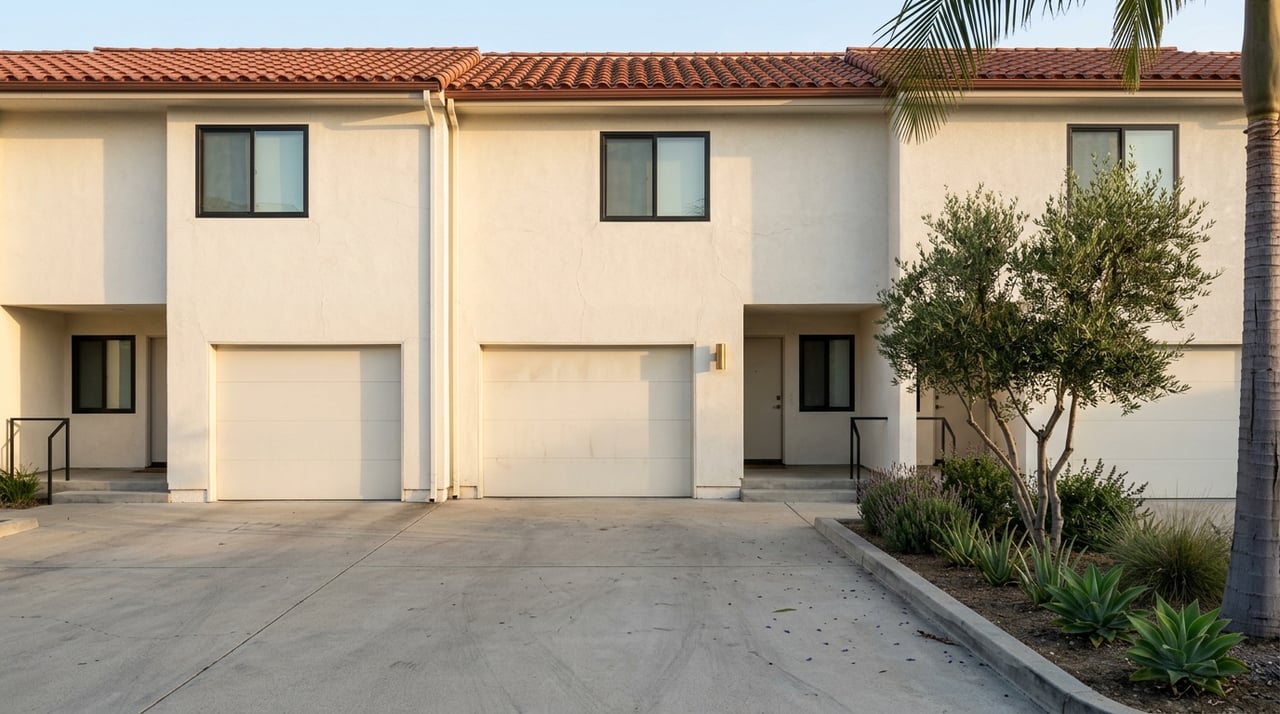
Trying to choose between a condo and a townhome in Orange County? You are not alone, and the answer is often less obvious than the listing makes it seem. If you want the right fit for your budget, lifestyle, and long-term plans, you need more than a label. You need to understand how the property is legally structured, what the HOA handles, and how that can affect financing, monthly costs, and resale. Let’s dive in.
Why the label can be misleading
In California, townhome is a housing style, not a legal ownership category. That means an attached two-story home that looks like a townhome could be legally set up as a condominium project or as a planned development.
That distinction matters because the recorded ownership documents, not the marketing label, tell you what you actually own and what the HOA is responsible for. Even some detached homes can legally be condos, which is why appearance alone does not tell the full story.
What you may actually own
When you buy in an Orange County attached-home community, the key question is not just what the home looks like. The real question is what the deed, CC&Rs, and project documents say about your ownership.
In a condo arrangement, owners generally share ownership of exterior areas and common spaces. In a planned development, you may own the lot itself while shared spaces like private streets, landscaping, or recreation areas are maintained in common.
Why ownership structure matters
Your ownership structure can shape your maintenance duties, insurance needs, and monthly expenses. It can also affect what changes you can make to the property and how lenders evaluate the community.
If you are comparing two similar homes in Santa Ana, Anaheim, Orange, or Irvine, the one with the better legal and financial setup may be the stronger buy, even if the other has a more appealing label.
How HOA responsibilities affect your costs
California HOAs operate under documents such as CC&Rs, bylaws, and rules, along with the Davis-Stirling Common Interest Development Act. In practical terms, those documents explain what the HOA can maintain, what it can restrict, and what it can enforce.
That is why one of the smartest things you can do as a buyer is review the HOA documents early. They can tell you far more about day-to-day ownership than the listing remarks ever will.
What HOA dues may cover
In many condo communities, monthly dues may help cover:
- Exterior repairs
- Common-area maintenance
- Certain utilities
- Insurance for shared areas
- Reserve funding for future repairs
That can support a lower-maintenance lifestyle, but it also means you need to understand exactly what is included and what is not.
Why reserves and assessments matter
California buyers should also review the annual budget report and reserve disclosures. The budget report includes a reserve summary and reserve funding disclosure, and the board must complete a reserve-study visual inspection at least once every three years for major components.
This matters because weak reserves or deferred repairs can lead to special assessments. For a value-focused buyer, especially in a price-sensitive market, that can change the true monthly cost of ownership in a big way.
Parking, privacy, and outdoor space
A lot of buyers assume a townhome automatically means more privacy, more parking, or a more house-like setup. In reality, that is not always true.
Parking spaces, patios, driveways, and yard areas may be classified as exclusive-use common area. That means you may have the right to use them, but they may not be owned the same way you expect.
What to verify before you buy
Before you move forward, confirm details like:
- Whether parking is deeded, assigned, or shared
- Whether guest parking is available
- Whether patios or yard areas are exclusive-use common area
- Whether you can make exterior changes
- Whether the layout is attached side-by-side or detached
If noise, private outdoor space, or flexibility matter to you, the documents and physical layout deserve close review.
Orange County prices vary by city
Orange County attached housing is not one single market. Prices can vary sharply depending on where you are shopping.
In May 2026, the median condo sale price was about $478,000 in Santa Ana, $706,000 in Anaheim, $734,000 in Orange, and $1.206 million in Irvine. That spread shows why local context matters when you compare a condo and a townhome-style property.
What that means for buyers
If you are buying in Santa Ana or Anaheim, you may be more focused on monthly payment, parking, reserves, and the risk of special assessments. In those cities, the right attached home may come down to overall value and predictability of costs, not just style.
If you are shopping in Orange, you may want a more house-like layout while still staying below the price of many detached homes. In that case, it is still important to verify whether the property is legally a condo or a planned development.
If you are looking in Irvine, the higher attached-home price point can raise the stakes. Reviewing the HOA budget, reserve funding, master insurance policy, and project eligibility becomes even more important.
Financing can be different than you expect
Many buyers are surprised to learn that financing an attached home is not just about their own income, credit, and down payment. Lenders may also review the condition and financial stability of the community.
For condo financing, lenders can look at factors such as physical condition, financial strength, structural issues, legal issues, inspections, and other project-level concerns. A community with unresolved repairs or weak reserves can be harder to finance and may have a smaller buyer pool later when you sell.
FHA and project approval
If you plan to use FHA financing, the project itself must meet approval requirements. Those can include insurance coverage, financial condition, title matters, pending legal action, and property condition.
That means a home that looks affordable at first glance may not be as simple to buy if the community does not meet financing standards. For many buyers, this is one of the biggest reasons to investigate the project early.
A simple way to compare options
When you tour attached homes in Orange County, use a practical checklist instead of relying on the listing label.
| Comparison point | What to review |
|---|---|
| Legal structure | Is it a condo project or planned development? |
| Ownership | What do you own outright, and what is shared? |
| HOA scope | What does the HOA maintain, insure, and enforce? |
| Monthly cost | What are the dues, and are assessments a risk? |
| Parking | Is parking deeded, assigned, or limited? |
| Privacy | How close are neighbors, and what is the layout? |
| Outdoor space | Is the patio or yard privately owned or exclusive-use common area? |
| Financing | Is the project likely to meet lender requirements? |
| Resale | Could HOA finances or condition affect future buyers? |
Which option may fit you better
A condo often fits buyers who want lower-maintenance living and are comfortable with shared ownership of certain spaces and systems. It can be a smart option if your priorities are convenience, predictable exterior maintenance, and a lower entry point in some Orange County submarkets.
A townhome-style property may appeal to you if you want a more house-like floor plan, more separation between living areas, or a different exterior feel. But remember, the style alone does not tell you how the property is owned, maintained, or financed.
The smartest question to ask
Instead of asking, “Should I buy a condo or a townhome?” a better question is, “What am I actually buying, and how will it affect my monthly costs, lifestyle, and resale?”
That mindset can help you avoid surprises and make a more confident decision. In a market as varied as Santa Ana, Anaheim, Orange, and Irvine, clarity matters.
If you want help comparing attached-home options in Orange County, Misael Vasquez can help you look past the label and focus on the details that matter most.
FAQs
What is the difference between a condo and a townhome in Orange County?
- In California, a townhome is a style of home, while a condo is a legal ownership structure. You need to review the property documents to know what you are actually buying.
Why do HOA documents matter when buying a condo or townhome?
- HOA documents explain maintenance duties, restrictions, dues, reserve funding, and the risk of assessments, which all affect your costs and ownership experience.
What should Orange County buyers check about parking in a condo or townhome community?
- You should confirm whether parking is deeded, assigned, shared, or considered exclusive-use common area, because the listing label may not tell you the full answer.
Can a townhome-style property be legally a condo in California?
- Yes. In California, a home that looks like a townhome can still be legally structured as a condominium project.
How can HOA finances affect condo resale in Orange County?
- HOA finances can affect lender approval, buyer demand, and resale strength, especially if the community has weak reserves, unresolved repairs, or project-level issues.
What were Orange County condo prices in May 2026?
- The median condo sale price was about $478,000 in Santa Ana, $706,000 in Anaheim, $734,000 in Orange, and $1.206 million in Irvine.